Prices are estimates from typical local jobs and vary by home.
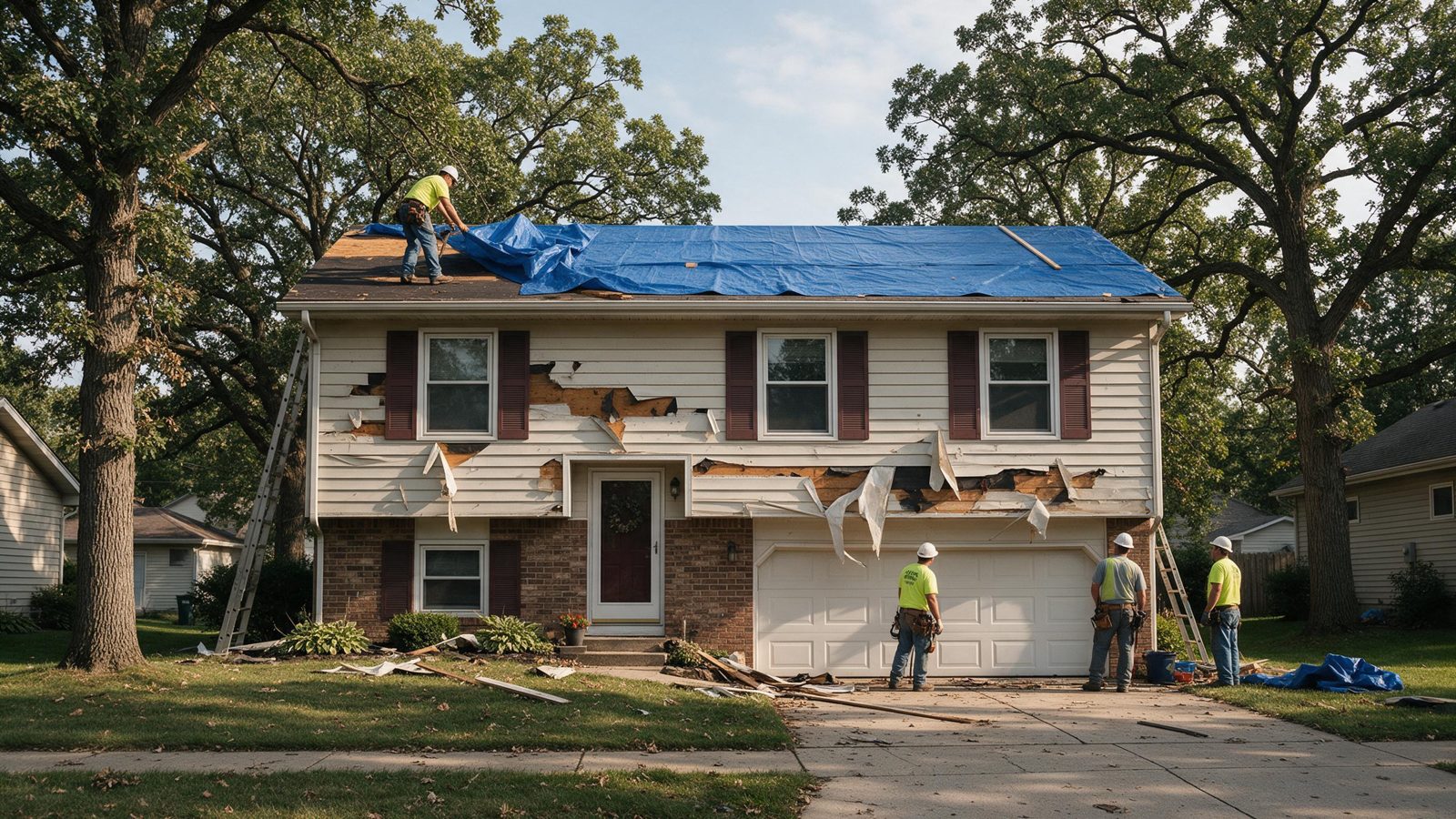
After the 2020 derecho, nobody in Marion needs to be told what a summer storm can do. When wind, hail or a falling limb damages your home, we connect you with local crews who secure it fast and repair it right.
Call Get a free quote ShopMarion sits right in the path of the storms that roll across eastern Iowa every spring and summer. Straight-line winds peel back shingles and siding, hail dents gutters and cracks vinyl, and the big maples and oaks that shade older streets near Thomas Park can drop limbs straight onto a roof. Even a storm that seems minor can loosen flashing or crack a window seal that starts leaking weeks later.
Homeowners in ZIP code 52302 and the surrounding area can use this service to reach crews for the whole range of exterior storm repairs. One house may need an emergency tarp tonight and a full roof next month. Another may only need a few siding panels and a new section of gutter. Sharing what you can see helps the pro decide whether to bring a tarp, a ladder or a full crew.
Storm work often comes with an insurance claim, and that is where clear documentation pays off. A local contractor can photograph damage, measure what needs replacing and write a scope you can compare with the adjuster's report. Keep your own photos with dates, and hold on to receipts for tarps, tree removal and any temporary repairs you paid for.
Be cautious with out-of-town crews who knock on doors after a big storm. Ask for a local address, proof of insurance and a written estimate before you sign anything, and never hand over your claim check before work begins. Working through local pros who will still be around next season makes warranty questions much easier.

When a limb punches through the roof or a window breaks, a crew can tarp the opening and board up glass to keep rain out until permanent repairs are scheduled. Tell them if water is entering now so they can come prepared.
A pro can replace missing or creased shingles, reseal lifted tabs, repair flashing and check vents and skylights for damage. When damage is widespread, they will explain whether a full replacement makes more sense than patching.
Hail cracks vinyl and dents aluminum, while wind can rip panels and soffit away. A crew can match and replace damaged sections, repair fascia and trim, and make sure the house wrap underneath is intact before closing it up.
Dented or torn-off gutters stop draining correctly and can send water against the foundation. A local installer can replace damaged runs with seamless gutters and reattach downspouts so the next storm drains properly.
Broken glass, cracked frames and shredded screens are common after hail. A pro can replace sashes or whole units and check that the surrounding trim and flashing were not damaged too.
A contractor can document visible storm damage with photos and measurements and prepare a written scope. Your insurer makes the coverage decision, but a clear estimate helps you review the adjuster's numbers line by line.
This site is only for storm repair in Marion, IA and nearby towns. We connect you with a pro who works in the area.
Share your town, what you need and how soon. There is no cost to ask and no obligation.
The costs, steps and questions on this page are general guides, so you know what to ask before you hire.
Ask any pro for a written estimate that lists the work, materials and timeline before the job starts.
Stay off the roof after a storm and keep well away from downed power lines; report those to Alliant Energy. Look from the ground, take photos and let a pro do the climbing.
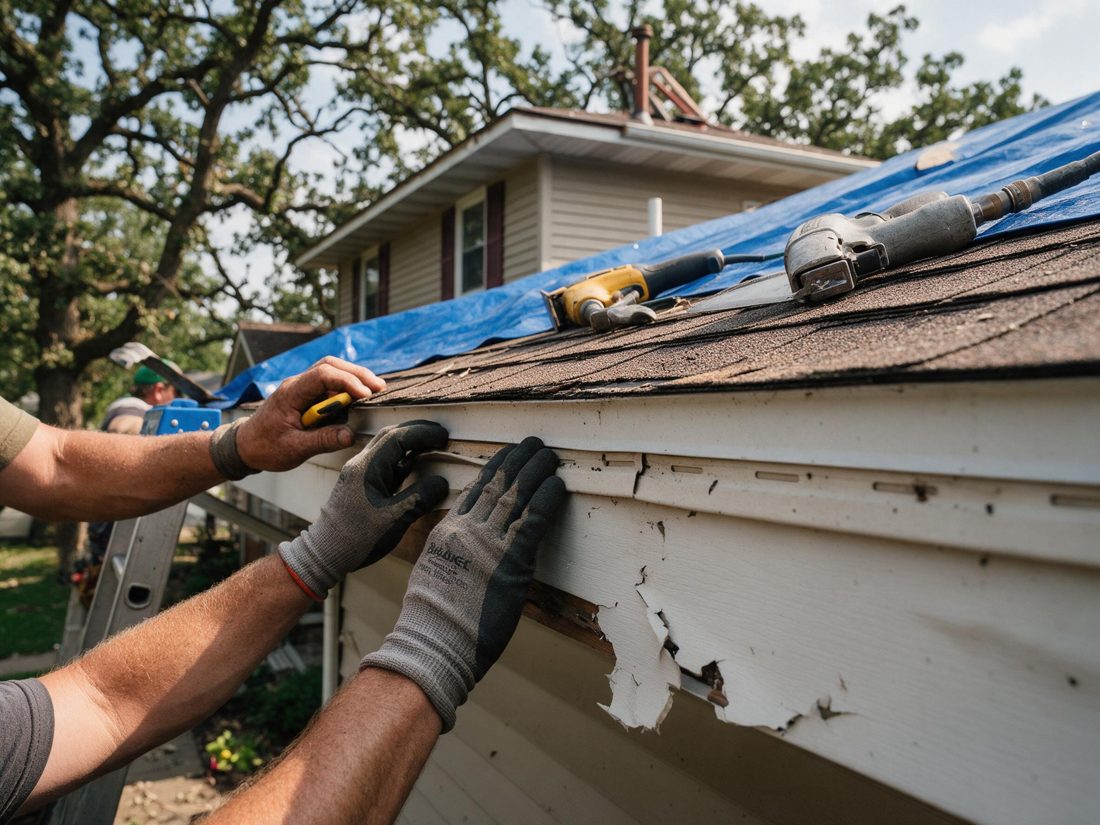
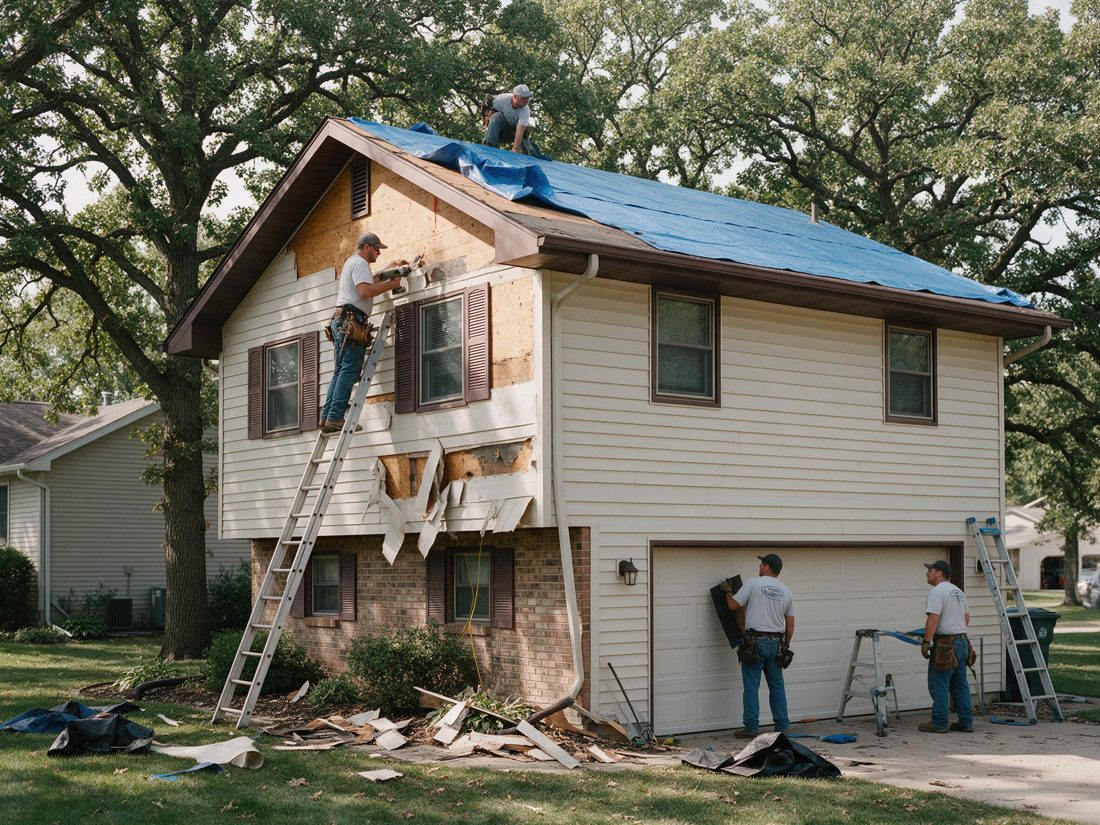
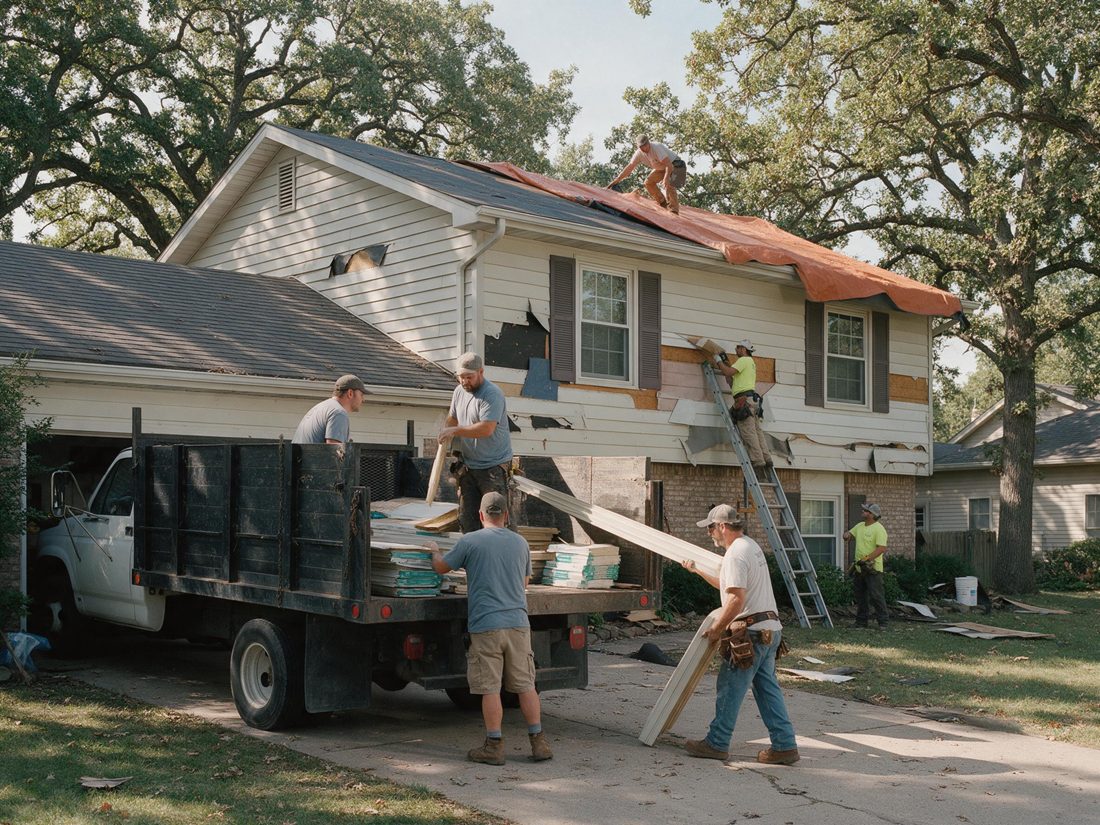
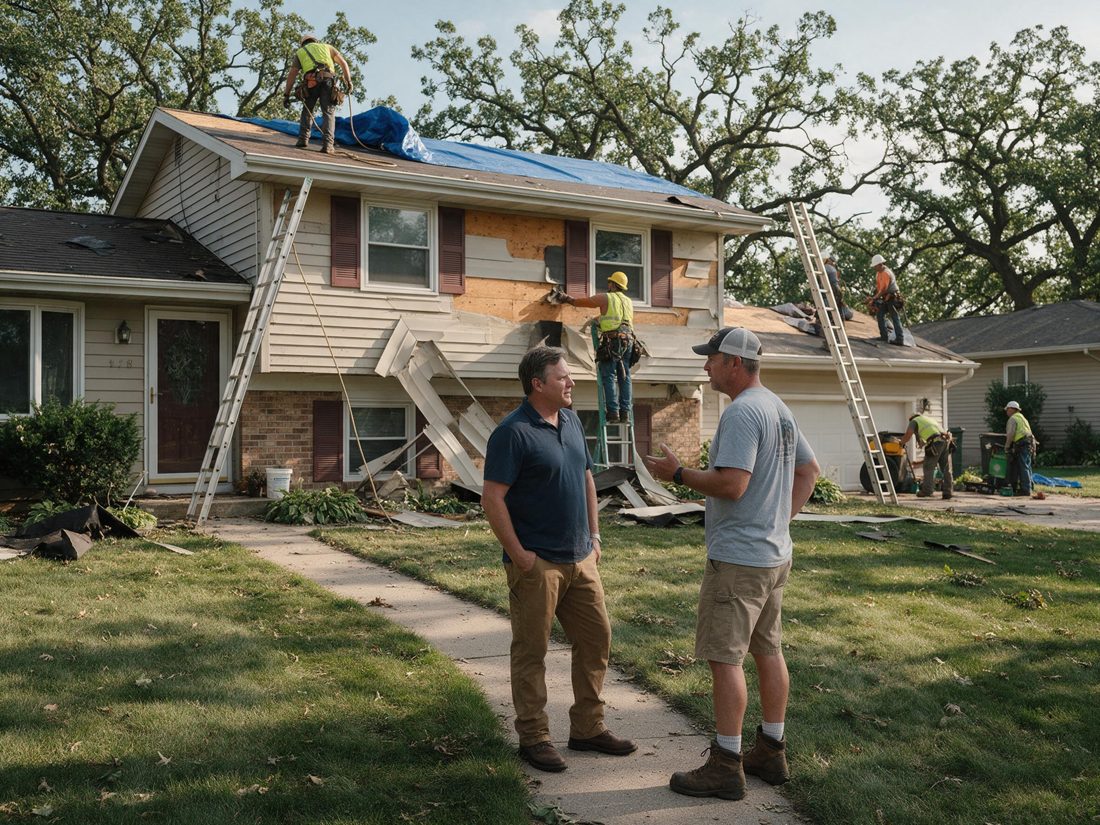
Emergency tarping typically runs $300 to $1,000, depending on the size of the opening and the roof's pitch. Board-up for a broken window is often a few hundred dollars. These temporary costs are usually part of an insurance claim, so save the receipts.
A roof replacement on a typical Marion home often costs $10,000 to $20,000 with architectural shingles, and impact-resistant Class 4 shingles can add roughly 10 to 25 percent. Siding repairs range widely, from a few hundred dollars for a handful of panels to $8,000 or more when a whole wall needs replacing to get a color match.
When storm damage is covered, you generally pay the deductible and the insurer pays the approved amount. Coverage depends on your policy and the adjuster's findings, so get a written estimate and ask how the contractor handles damage discovered once work starts.
Before storm season, trim branches that hang over the roof and have a certified arborist look at any large tree that leans toward the house. Clean gutters so heavy rain has somewhere to go, and secure patio furniture and grills that can become projectiles in a strong wind.
Take photos of your roof, siding and windows on a calm day each spring. Those before pictures make it much easier to show an adjuster what changed after a hailstorm. Store them in the cloud along with a copy of your insurance policy and your agent's phone number.
After the storm passes, walk around the house and look for granules in the downspouts, dents in metal vents and gutters, cracked siding and broken screens. Check the attic with a flashlight for wet insulation or daylight. Write down what you find and the date, then request an inspection.
When you get estimates, compare the same scope on each one: the number of squares of shingles, underlayment, flashing, gutters and siding sections. Ask whether permits are included, how long the crew expects to be on site and what workmanship warranty they offer. A local crew that lists Marion, Hiawatha and Cedar Rapids work is easier to reach if something needs attention later.
Local crews often work in Cedar Rapids, Hiawatha, Robins, Springville, Alburnett and Lisbon too. Share your address and project details to see if a pro serves your location.
On August 10, 2020, a derecho crossed Iowa and hit Linn County with some of its strongest winds. The National Weather Service estimated gusts of up to about 140 miles per hour in the Cedar Rapids area. In Marion, the storm took down a large share of the city's trees, crushed garages and sheds, stripped shingles and siding, and left many homes without power for days. Streets from Uptown Marion to the newer neighborhoods on the east side were blocked by trunks and limbs.
Several lessons from that storm still apply. Trees were the biggest single cause of roof damage, so the healthiest thing you can do for your roof is to have large trees near the house looked at by an arborist. Damage that looked minor in August showed up as leaks in the fall, because wind had lifted shingles and broken their seal without tearing them off. And the homeowners who recovered fastest were the ones with dated photos, a copy of their policy and a list of what they owned.
Many Marion yards have been replanted since 2020. Young trees grow fast, so plan where they will be in fifteen years and keep them away from the roofline, gutters and service wires.
Eastern Iowa gets hail most years, usually from spring and summer thunderstorms, and tornado warnings are part of life in Linn County. When a storm is coming, go to the basement or an interior room on the lowest floor, away from windows. After it passes, start with safety: watch for downed lines, gas smells and damaged chimneys before you look at the roof.
If your roof or siding needs replacing, a storm claim is a chance to upgrade. Impact-resistant shingles tested to UL 2218 Class 4 hold up better to hail, and some insurers offer a discount for them, so ask your agent before you choose. Thicker siding with a solid backer resists dents better than thin vinyl, and seamless gutters with hidden hangers stay put in high wind. Make sure the estimate lists ice and water shield at the eaves, new drip edge and flashing, since those protect the house from ice dams in winter as well as rain in summer.
Iowa requires most contractors to register with the state, and the City of Marion can tell you which roofing and structural repairs need a permit. Ask any crew for its registration, its proof of insurance and who pulls the permit. Keep a basic storm kit ready, with a weather radio, flashlights, batteries and a first aid kit. For gear that has been tested the hard way, see DC's Storm & Survival Picks; DC has come through 35 tornadoes and 5 hurricanes.
Most policies require prompt notice, and some set a time limit for hail and wind claims. Contact your insurer soon after the storm and schedule an inspection so the damage is documented while it is fresh.
It is safer to let a crew handle it, especially on a wet or steep roof. If you do anything yourself, stay on the ground and focus on moving belongings away from leaks.
No. Bruised shingles and cracked flashing often cannot be seen from the yard. Dents in gutters, vents or a car are good clues that the roof deserves a closer look.
It depends on the roof's age and how much of it was damaged. A few missing shingles can be repaired, while widespread hail bruising often makes replacement the better choice. Ask for the recommendation in writing.
Call a tree service to remove limbs safely first, then have the roof and siding inspected. Many policies cover removal of a tree that hit an insured structure, so keep the bill.
Tell us where the home is, what you are seeing and how soon you need help. We can connect you with a nearby pro in the Marion area to talk through the job and next steps.
No obligation and no pressure.
Official government and National Weather Service pages. Follow local officials during evacuations.